
Why Does Oil Float on Water? Density Science for Home Herbalists
You might have stared at a puddle of oil on your herbal infusion or a glossy layer on soup, wondering why they refuse to blend. From my apothecary shelf to your kitchen, this separation is a gentle reminder of a fundamental physical rule we can use to our advantage.
You will see how a concept called density makes oil rise, and why that knowledge is practical for your blends. We will cover:
- Density explained with a simple jam jar analogy.
- How weight and volume decide what floats.
- The direct link to making stable lotions and aromatherapy mixes.
- My personal method for predicting oil behavior in recipes.
Key Takeaways
- Oil floats on water because it is less dense-it has less “stuff” packed into the same space.
- This density difference is why you must mix aromatic plant oils into a carrier oil before adding to water, for safe skin application.
- Don’t confuse weight with density; a cup of olive oil weighs less than a cup of water, even though the oil feels rich and thick.
- Every common oil in your wellness cabinet, from light jojoba to viscous castor oil, has a density lower than water’s 1000 kg/m³.
Density Explained: Not Weight, But Compactness
Think of density as how much “stuff” is packed into a space. I imagine my jar of dense shea butter next to a jar of light fractionated coconut oil on my shelf.
They’re the same size, but the shea feels heavier in my hand.
Here’s a simple analogy. A fluffy cotton ball and a small pebble might be the same size. The cotton ball is light and airy. The pebble is solid and heavy.
The pebble has higher density.
Scientists use a formula: mass divided by volume. For us, it just means comparing how heavy something feels for its size. If a substance is less dense than water, it will float on top.
This is the oil density vs water formula in plain language.
Is Oil Heavier Than Water? The Weight vs. Size Puzzle
Many people get tangled here. Weight is how heavy something is. Density is about weight for a specific size.
Picture this. I measure one cup of water and one cup of olive oil to check the difference in weight and volume. The cup of oil will weigh less on my kitchen scale.
So, is oil denser than water? No, it’s less dense.
This explains why even thick, rich oils float. They might feel viscous and slow to pour, but for their volume, they’re still lighter than water.
A Numbers Snapshot: Oil Density vs Water in kg/m3
Here’s a quick look at the numbers. Water sets the benchmark at about 1000 kilograms per cubic meter (kg/m³).
| Liquid | Approximate Density (kg/m³) |
| Water | 1000 |
| Fractionated Coconut Oil | 920 |
| Jojoba Oil | 870 |
| Olive Oil | 910 |
| Castor Oil | 960 |
All these oils have densities below 1000. That’s the visual proof: every one will float on water.
This simple oil density vs water chart shows why your blends layer the way they do.
Why This Science Matters for Your Oils at Home
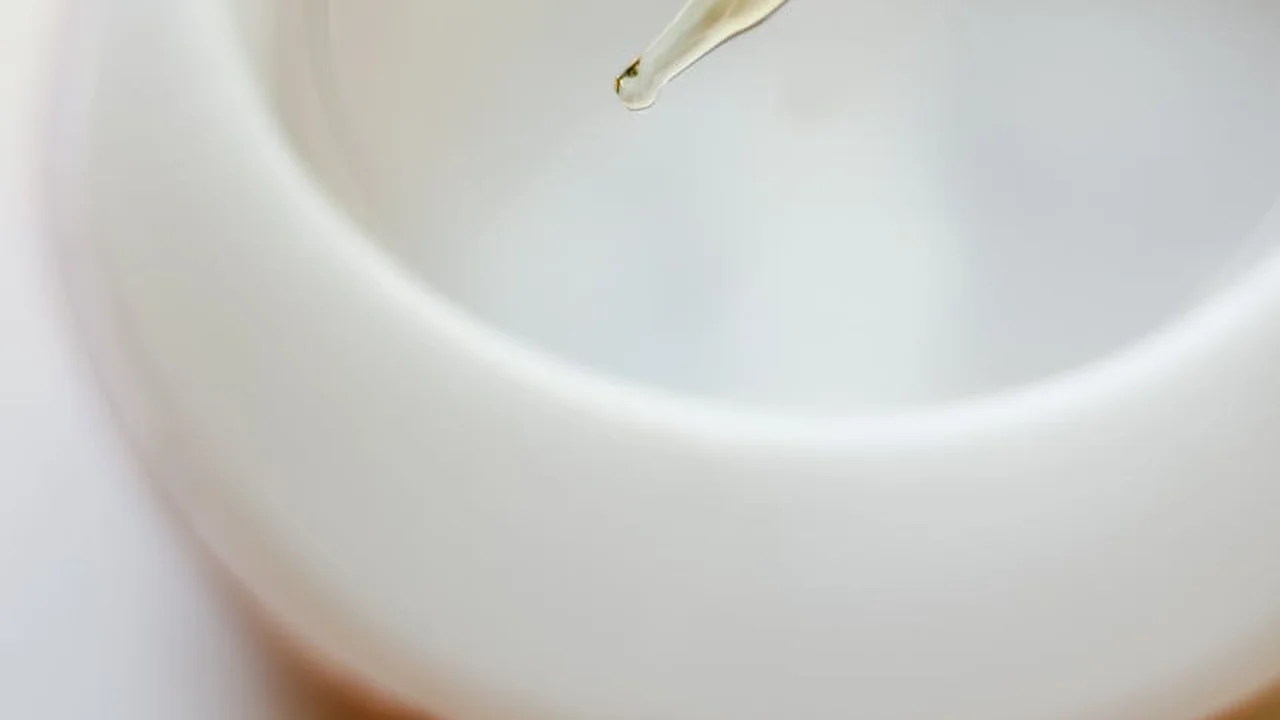
This density principle isn’t just a fun fact. It’s the practical key to using your oils safely and effectively.
Because oils float, they naturally resist mixing with water. This means creating a lotion, a bath blend, or a cleaning spray isn’t as simple as shaking oil and water together. They will always separate without a helping ingredient, called an emulsifier or solubilizer, especially when dealing with botanical oils.
Understanding this simple fact saves you from creating ineffective or even unsafe blends.
The Crucial Rule for Safe Skin Application
This science is vital for bath time. Pure essential oils are potent and can irritate skin.
Since essential oils are less dense than water, dropping them directly into your bath means they will float in concentrated patches right on the surface, where your skin contacts them.
You must always dilute essential oils into a carrier oil first. The carrier oil disperses the essential oil, creating a safer, floating layer. Here’s my go-to method for a relaxing bath:
- In a small bowl, combine 1 tablespoon of a carrier oil like sweet almond or jojoba (I keep a dedicated bottle by my tub).
- Add 3 to 6 drops of your chosen essential oil, like lavender or chamomile.
- Stir vigorously with a spoon for a full 30 seconds to ensure it’s completely mixed.
- Pour this blend into your full, running bath. The pre-diluted oil will float, but the essential oil is now safely dispersed within it.
Cleaning Up Oil Spills: Why Water Alone Fails
The same principle explains why washing a greasy dish with just water is so frustrating.
You spray water, but the oily grime just beads up and floats. The water slides underneath it, unable to grab hold and lift it away. This leaves that familiar filmy residue.
Soap or dish detergent acts as a bridge; its molecules surround tiny droplets of oil, allowing them to be rinsed away with water.
For a sticky essential oil bottle or a greasy stovetop, I always reach for soap first. A little castile soap on a rag cuts through the oil so water can finish the job.
Do All Oils Float? A Note on Exceptions and Thickness
In your kitchen and apothecary, the answer is essentially yes. Virtually all common botanical, carrier, and cooking oils are less dense than water.
It’s easy to confuse density with viscosity, which is thickness. A thick, slow-moving oil like castor oil or black seed oil is still lighter than water. It will float, just very slowly.
While some isolated chemical components or synthetic oils can be denser, you’re very unlikely to encounter them in everyday practice with whole plant oils.
If you ever get a new oil and are curious, a simple test in a glass of water will show you its true nature.
Try It Yourself: A Simple Oil and Water Density Experiment
Seeing this science in action makes it click. You can do this classic oil and water density experiment with items from your kitchen right now.
Grab a clear glass, some water, any cooking oil (like olive or vegetable), and food coloring.
Step-by-Step: Watch the Layers Form
- Fill your glass about halfway with cool water.
- Slowly pour the cooking oil on top until the glass is about three-quarters full. Watch how the oil forms a clear, distinct layer above the water.
- Now, add a single drop of food coloring. Watch it closely.
The drop will bead up, sink through the oil layer, and then burst into a vibrant plume as soon as it hits the water below. This visually proves the two layers are separate and that the coloring, which is water-based, can only mix with the water.
What This Shows About Blending for Body and Home
This glass is a model for any product you want to make that combines oil and water.
Want a refreshing room spray with essential oils? You can’t just put oil and water in a bottle. To create a stable mist, you need a solubilizer like rubbing alcohol or a specialty dispersant to bridge the gap, just like the soap did for cleaning. Water alone isn’t effective for diluting essential oils.
The same goes for creating a light body milk or a linen spray. Recognizing this separation is the first step to blending effectively and safely for all your homemade creations.
When to Seek Professional Help
Working with botanical oils is wonderfully empowering, but knowing when to ask for help is a sign of true wisdom.
It keeps you and your home safe.
For Personalized Oil Advice
If you are considering using essential oils internally or have a specific, complex health condition, talk to a certified aromatherapist, especially when you mix essential oils with carrier oils for safe and effective body treatments.
A qualified professional can create a tailored plan that considers your full health picture, something a general article cannot do.
I consult with colleagues when formulating for delicate situations; it’s the responsible choice.
For Accidental Ingestion or Severe Reactions
If someone swallows an essential oil or has a bad skin reaction like intense burning, swelling, or difficulty breathing, seek medical help immediately.
Do not wait. Call poison control or go to the emergency room.
Keep your oil bottles handy to show the medical team exactly what was involved.
For minor skin irritation, simply wash the area well with soap and cool water.
For Household Oil Spills and Clogs
Accidents happen. I’ve cleaned my share of oily messes.
If you spill a large amount of carrier oil (like a whole bottle of sweet almond oil) on the floor, wipe it up quickly to prevent slips.
If a significant amount of any fat or oil goes down your kitchen drain, call a plumber to assess the risk of a clog.
Oils solidify in pipes, and yes, they really do contribute to those giant, floating “fatbergs” you hear about.
For small amounts, run hot water and dish soap afterward to help break it down.
Quick Answers from Your Plant Oil Guide
Does shaking oil and water make them mix for good?
No, shaking just creates a temporary emulsion. Without an emulsifier like beeswax or lecithin, the oil and water will always separate again due to their different densities, which is why homemade lotions can split.
If oils float, how do we make stable room sprays or body mists?
We use a bridge ingredient. For water-based sprays, a solubilizer like polysorbate 20 or high-proof alcohol is needed to temporarily hold the oil and water together in a stable, mistable blend. Lavender is a popular anchor for blends, so looking at its best pairings can guide your formulation choices. For a quick reference, our lavender pairings guide highlights which essential oils mix well with it.
Can I use a density calculator for my herbal oil recipes?
It’s usually unnecessary. Since all common botanical oils are less dense than water, focusing on the purpose of each oil (e.g., jojoba for lightness, castor for slip) is more practical for effective formulation than precise density calculations.
Why do some thick oils feel heavier but still float?
You’re sensing viscosity, not density. A viscous oil like castor oil flows slowly, but for its volume, it’s still lighter than water-a perfect example of why “thick” doesn’t mean “dense” in the scientific sense.
Does the oil’s plant source change its density enough to matter?
While densities vary slightly (see our chart), all are below water’s 1000 kg/m³. For your home blends, the difference between, say, almond and sunflower oil is negligible; choose based on skin feel or botanical benefits instead.
Why Oils Float: A Note from My Apothecary
Grasping that oils float because they are less dense than water lets you blend and layer them intentionally for your skin, hair, and home. This simple truth is the foundation for creating effective, stable potions that honor each oil’s natural character.
I invite you to experiment with this knowledge and trust both the advice I share and your own sensory experience. Your hands-on practice with oils for body, skin, hair, wellness, and home is where true confidence grows. Do use specific oils to perform oil cleansing for skin and hair, and notice how the ritual meets your senses. Let that mindful practice guide you.
Relevant Resources for Further Exploration
- Density of common fluids
- Simulations & Videos for Lesson 3.5: Density: Sink and Float for Liquids – American Chemical Society
- What is the difference between the density of oil and water? – Quora
- Liquid Densities
- Water, Oil, and Gas Fluids Density and Viscosity
Noemi Kamińska
Noemi is an accomplished wellness researcher, nutrition care guide and body care expert. She has years of experience in formulating various oil combinations for full body wellness including face, hair, body care, essential oils and cooking oils. She works as a bio-formulator working with oil chemistry and analyzing the best formulations when it comes to your needs. Feel free to reach out to get your oil needs sorted.