
How Do You Make Chili Oil for Cooking, Drizzling, and Marinades?
If you love that warm, spicy flavor but are unsure where to start, I understand the hesitation. From my own apothecary shelf, I can assure you that making a safe, flavorful chili oil at home is a straightforward process you can master.
This article walks you through my trusted infusion technique and its three most useful applications.
- Crafting your own chili oil from scratch
- Using it to build flavor while cooking
- Drizzling it for a finishing touch
- Mixing it into powerful marinades
The Fiery Essence: What is Chili Oil?
Chili oil is a simple infused oil, not a highly concentrated essential oil. Think of it like steeping tea leaves, where dried chilies and spices slowly release their essence into a neutral carrier oil.
It has a deep, inviting red color that glimmers in the light. The aroma is a warm blend of toasted spices and a steady, building heat. When you smell it, you might catch the earthy scent of chilies first, followed by the sharp, clean notes of garlic or ginger.
This makes it a versatile botanical preparation for your home kitchen. It bridges everyday wellness, like offering gentle digestive warmth, with the practical craft of cooking. I keep a jar on my shelf for both drizzling on meals and adding a comforting warmth to my day.
Your Apothecary Jar: How to Make Chili Oil Safely at Home
Making chili oil is about infusion, not ‘canning’ peppers in oil. Submerging fresh, low-acid ingredients in oil at room temperature can create a risk for botulism, a serious foodborne illness.
I see this process as a simple, mindful kitchen ritual. Taking the time to toast your spices and warm the oil connects you to your ingredients in a calming, intentional way.
What Ingredients Are Needed for Chili Oil?
You only need a few core components. Start with dried chili flakes or powder, whole aromatics like garlic cloves, sliced ginger, or star anise, and a neutral carrier oil. Using dried chilies is crucial for both safety and achieving a rich, stable flavor.
For more complexity, consider optional additions. Sesame seeds add a nutty crunch, Sichuan peppercorns bring a tingling numbness, and a pinch of sugar can soften the heat’s edge. In my own apothecary jar, I love adding a spoonful of gochugaru (Korean chili flakes) and a few crushed cardamom pods for a unique twist.
If you prefer fresh peppers, note they require a different method for safety. Any oil made with fresh chilies or garlic must be refrigerated immediately and used within one week.
What Type of Oil is Best for Chili Oil?
Choose a neutral oil with a high smoke point. Good options are grapeseed, sunflower, peanut, or light olive oil.
These oils have a clean, mild taste that lets the chili and spice flavors shine without competition.
Neutral-flavored oils are ideal for cooking when you want the spices to stand out.
Compare them to strongly flavored oils. Different oils offer distinct taste profiles in cooking and baking. Knowing these profiles helps balance heat and flavor. Extra virgin olive oil or unrefined coconut oil have dominant tastes that can overwhelm the chilies. For this infusion, a neutral base acts like a clear glass jar, perfectly showcasing the fiery ingredients inside.
My personal favorite is grapeseed oil. It has a light, almost silky texture that carries the heat beautifully and never clouds up in the fridge. This also fits into our guide on the healthiest cooking oils for everyday use and how to choose the best oils for your kitchen.
How Do You Infuse the Oil with Chili Flavor?
There are two reliable methods: the gentle heat method and the pouring hot oil method. Both techniques gently warm the spices to release their oils, creating depth without bitterness.
For the gentle heat method, combine your oil and all dry ingredients in a small saucepan. Warm it over low heat until you see tiny bubbles and smell a toasted fragrance, about five to ten minutes. Keep the heat very low to steep the flavors, not fry the spices.
For the pouring hot oil method, place all your dry ingredients in a heatproof bowl. Heat the oil separately in a pan until it shimmers (around 225°F or 110°C), then carefully pour it over the dry mix. It will sizzle and foam, releasing an incredible aroma instantly.
A critical safety tip: ensure your bowl and utensils are completely dry. Any moisture on the ingredients will cause the hot oil to sputter and pop, which can be dangerous.
How Long Does Homemade Chili Oil Last?
When stored in a clean jar in the refrigerator, homemade chili oil typically lasts 3 to 4 weeks. This shelf life depends on using fully dried ingredients and maintaining clean utensils throughout the process.
Watch for clear signs of spoilage. An off or sour smell, unexpected cloudiness, or bubbles rising in the jar mean it’s time to discard it. Your nose is the best tool here; if the scent isn’t right, make a fresh batch.
State the critical safety rule: because it contains garlic or other fresh ingredients, it must be refrigerated and used quickly. I always label my jars with the date made and keep them in the back of my fridge where it’s coldest.
A Splash of Heat: How to Use Chili Oil in Your Kitchen
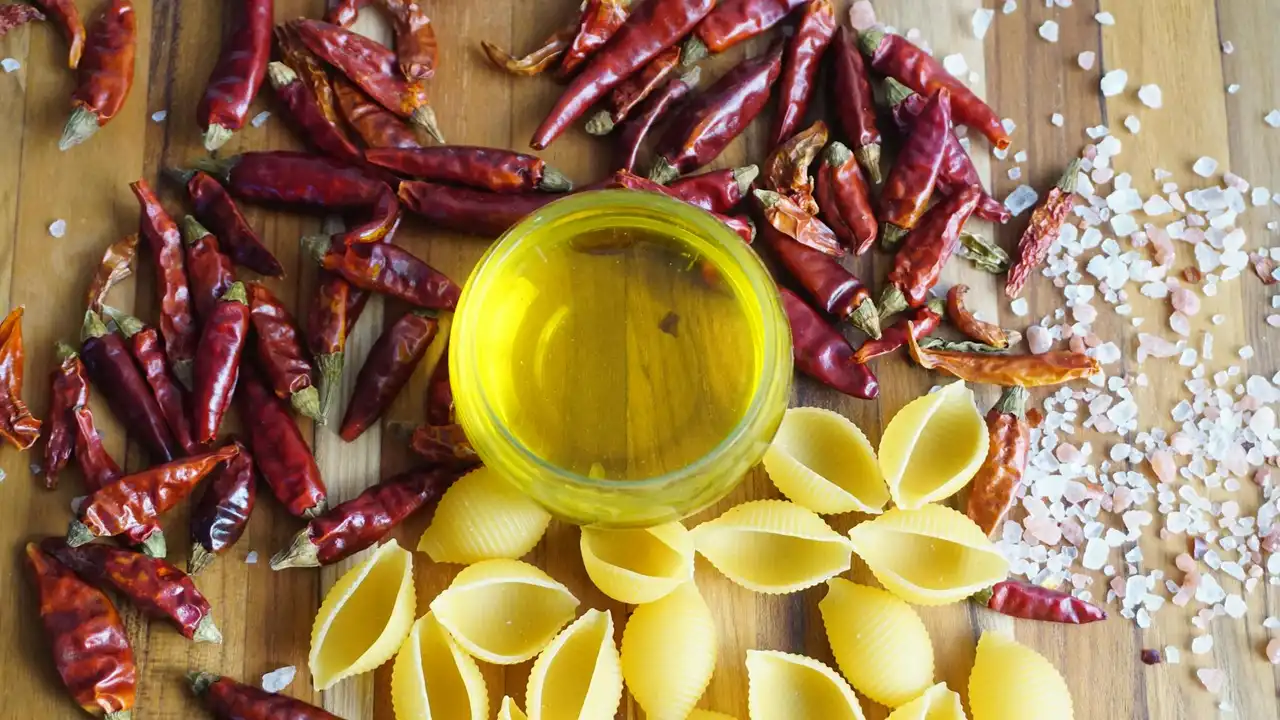
Now for the best part, using your creation. This is where your jar of infused oil transforms from a project into a daily kitchen companion. I keep my current favorite blend right by the stove.
Think of its uses in three ways: as a cooking foundation, a finishing flourish, and a flavor-deepening marinade.
How Do You Use Chili Oil for Cooking?
Use it anywhere you’d start with a neutral oil, but want an instant flavor boost. It’s your secret aromatic foundation.
Heat a tablespoon in your wok or skillet to start a stir-fry; it infuses everything with a warm, toasty spice from the first sizzle.
For a simple noodle base, I cook minced garlic in the chili oil just until fragrant, then toss with cooked noodles, a splash of the noodle water, and green onions.
Drizzle it over cubed potatoes before roasting, or toss freshly popped popcorn with a little melted butter and a teaspoon of this fiery oil.
How Do You Use Chili Oil for Drizzling?
This is where the oil becomes a glistening, scarlet garnish. The goal is texture and a burst of concentrated flavor.
Picture that rich oil pooling in the folds of steamed dumplings, or creating fiery rivulets on a slice of cheese pizza. I love a generous drizzle over avocado toast or a swirling spoonful melting into a simple broth.
For a quick dipping sauce, mix equal parts chili oil and soy sauce or black vinegar; don’t forget to scoop up some of the flavorful sediment from the bottom of the jar.
That sediment, the “good stuff,” is packed with the essence of the chilies and spices. Stir it right in.
How Do You Use Chili Oil in Marinades?
Here, the oil works double duty. It carries flavor deep into crevices and helps tenderize proteins with its fat content.
It’s fantastic for chicken thighs, flank steak, firm tofu, or even meaty king oyster mushrooms.
A simple marinade template I use is 2 parts chili oil, 1 part acid (like rice vinegar or lime juice), plus minced garlic or ginger and salt.
For example, mix two tablespoons of your chili oil with the juice of one lime, some cilantro, and a pinch of salt for shrimp destined for the grill. Let them sit for just 20 minutes.
Recipe Sparks: Simple Ideas to Ignite Your Meals
Let these ideas be your starting point. A little of your homemade oil can change an entire dish.
Toss a spoonful with broad noodles, a dash of soy sauce, and chopped peanuts for a quick take on a kuan spicy chili oil noodle bowl.
Whisk it with a little balsamic vinegar to make a spicy vinaigrette for a sturdy kale salad.
Stir a teaspoon into your scrambled eggs just before they set for heat that’s cooked in, not just sprinkled on.
Mix diced tomatoes, a chiffonade of basil, a pinch of salt, and a healthy drizzle of chili oil for a bruschetta topping with a kick. The oil soaks into the toasted bread beautifully.
Keeping the Flame: How to Store Your Chili Oil Properly
Your kitchen now smells incredible, and a beautiful jar of ruby-red oil is sitting on your counter. What you do next matters just as much as how you made it.
Let your oil cool completely to room temperature before you even think about jarring it up. Rushing this step creates condensation inside the jar, and water is the enemy of homemade infusions.
Trapping that warmth while the oil is still hot invites moisture and can drastically shorten your shelf life.
The Right Home for Your Spicy Infusion
I always reach for a clean glass jar with a tight-sealing lid, like a classic mason jar. Glass doesn’t hold onto flavors or interact with the oil.
Make sure it’s impeccably clean and completely dry. Any lingering water droplets are a welcome mat for spoilage.
A simple glass jar is your best tool for keeping your chili oil pure and potent for months.
The Cold Truth About Freshness
This is the non-negotiable rule for any oil infusion you make at home: refrigerate it. The cool, dark environment of your fridge is the best preservative you have, especially for delicate oils like olive, avocado, and nut oils.
Every single time you use it, grab a clean, dry spoon. Never double-dip. Introducing crumbs or bacteria from a used spoon is how a lovely infusion turns funky before its time.
Refrigeration and a clean spoon are the two simple habits that protect all your hard work. I keep mine right next to my herb-infused massage oils in the fridge door.
Why Your Homemade Version is Different
Store-bought chili oils can sit on a shelf for years because they often contain preservatives and stabilizers.
Your version is alive. It’s just oil, chilis, and aromatics. That purity is its magic and its vulnerability.
Embrace the shorter, refrigerated shelf life as proof you made something real, with no chemical helpers. It’s the same reason my homemade calendula oil needs a cool, dark cupboard while a bottle of mineral oil does not. (Something that no chemical oil has).
Your Chili Oil Questions, Answered
What type of oil is best for chili oil?
Choose a neutral, plant-based oil like grapeseed or sunflower for their high smoke points and mild flavor. This clean base ensures the chili and spice essences are the true stars of your infusion.
How do you infuse the oil with chili flavor?
The “hot-pour” method creates an instant, aromatic infusion, while the “gentle heat” method offers more control. Both safely unlock the chilies’ essential oils and toasty notes without bitterness.
How long does homemade chili oil last?
When made with fully dried ingredients and stored in the fridge, expect a shelf life of about one month. Your nose is your best guide-discard it if the scent becomes off or sour.
How do you use chili oil for drizzling?
Add it as a finishing flourish to dishes like creamy soups, avocado toast, or grilled proteins just before serving. This preserves its vibrant color and delivers a concentrated burst of heat and aroma.
How do you store chili oil?
Always transfer cooled oil to a perfectly clean, dry glass jar and refrigerate it promptly. Using a dedicated clean, dry spoon every time is the simplest habit to prevent spoilage.
Bringing Botanical Heat Home
The most important lesson from my own shelf is this: your homemade chili oil is only as good as the ingredients you choose. Start with a fresh, high-quality carrier oil and vibrant, aromatic chiles for a result that truly supports your kitchen craft and home wellness. You might also be curious about the health benefits and culinary uses of chili oil.
I hope you feel confident to experiment with the chiles and herbs that call to you. Trusting your senses with these simple botanical infusions is a wonderful step in caring for your home and your meals.
Noemi Kamińska
Noemi is an accomplished wellness researcher, nutrition care guide and body care expert. She has years of experience in formulating various oil combinations for full body wellness including face, hair, body care, essential oils and cooking oils. She works as a bio-formulator working with oil chemistry and analyzing the best formulations when it comes to your needs. Feel free to reach out to get your oil needs sorted.