How Can You Tell If Your Essential Oils Are Pure?
When you invest in a beautiful bottle of essential oil, you want to know it’s the real deal. Your gut feeling that a price seems too good to be true, or a scent feels “off,” is often your first and most reliable clue.
This guide will walk you through a practical combination of simple home checks you can do yourself and the professional lab tests that offer definitive answers.
- Key markers of a quality supplier
- Four straightforward sensory tests to perform at home
- What professional laboratory analysis can reveal
- Understanding a GC/MS report
- My own apothecary checklist for vetting new oils
Why Purity in Your Bottle Matters So Much
Think of a pure essential oil as a concentrated plant conversation. Every drop holds the plant’s character and potential. An adulterated oil is just a whisper of that, or worse, a lie.
Your skin and senses know the difference. A pure lavender might soothe a minor burn. A version cut with synthetic linalool can cause redness and irritation. Adulterated oils often don’t deliver the wellness benefits you’re hoping for, making your efforts feel wasted, especially when seeking relief for burns.
People often ask me, are essential oils regulated in the USA? The FDA oversees labeling for safety, but they don’t approve or certify oils for therapeutic use. A company can say their oil “promotes relaxation” because that’s a structure/function claim. This means the burden of finding a trustworthy source lands on us. This is where FDA GRAS status and quality standards come into play. We’ll explore how these standards shape regulation and labeling.
Real quality has a cost. Distilling hundreds of pounds of rose petals or responsibly harvesting leaves from a West Indian bay rum tree is an intense process. When you pay a fair price, you’re paying for the integrity of the plant and the skill of the distiller, not just a pleasant smell. That bottle on my shelf from a known co-op is worth every penny.
Your Senses Are Your First Lab: Simple Home Checks
Before we talk labs, we listen. Your own senses, with a few kitchen items, can raise the first red flags about an oil’s character.
The Paper Test
This checks for heavy carrier oils. Place a single drop on a plain white piece of paper and let it sit for an hour. This quick check also helps identify high-quality botanical oils and spot issues like mold or cloudiness. Subtle color changes or hazing can signal quality concerns you’ll want to note as you compare oils.
A pure essential oil will evaporate completely, maybe leaving a faint, translucent ring. If you see a permanent, greasy stain, that’s likely a vegetable oil like coconut or almond. This is a clear sign the oil is not 100% volatile, which a true essential oil should be. It won’t catch all adulterants, but it’s a great first clue.
The Smell Test
This takes practice, but your nose is smart. First, never sniff directly from the bottle. Waft the scent toward you.
A pure oil’s aroma has layers and changes over minutes. A real bergamot starts bright and citrusy, then softens into a subtle floral-herbal drydown. A synthetic or adulterated version often smells harsh, flat, or strangely chemical from start to finish. If the scent gives you a sharp, immediate headache or feels one-dimensional, your nose is likely detecting synthetic compounds.
The Water Test
There’s a big myth here. Many believe pure oils float and adulterated ones sink. The truth is more about solubility. This is especially true for botanical oils, where solubility and lipophilicity explain why they don’t mix with water. Grasping these mixing properties helps explain when emulsions form.
Stir a drop into a glass of water. Most genuine essential oils will float on top and not fully mix. If it clouds the water instantly or creates milky streaks, it’s likely mixed with a dispersant or solvent. This test is blunt; it only points out the most obvious, heavy-handed cuts. Many modern adulterants will still float right alongside the pure oil, much like when you mix essential oils with carrier oils for dilution.
Remember, these home checks are like noticing a car has a flat tire. They tell you something is wrong, but they can’t diagnose a faulty transmission. They hint at problems but cannot confirm purity against sophisticated adulteration. Trust them to rule out very low-quality oils, but not to guarantee the highest quality.
When to Turn to the Professionals: Understanding Lab Tests
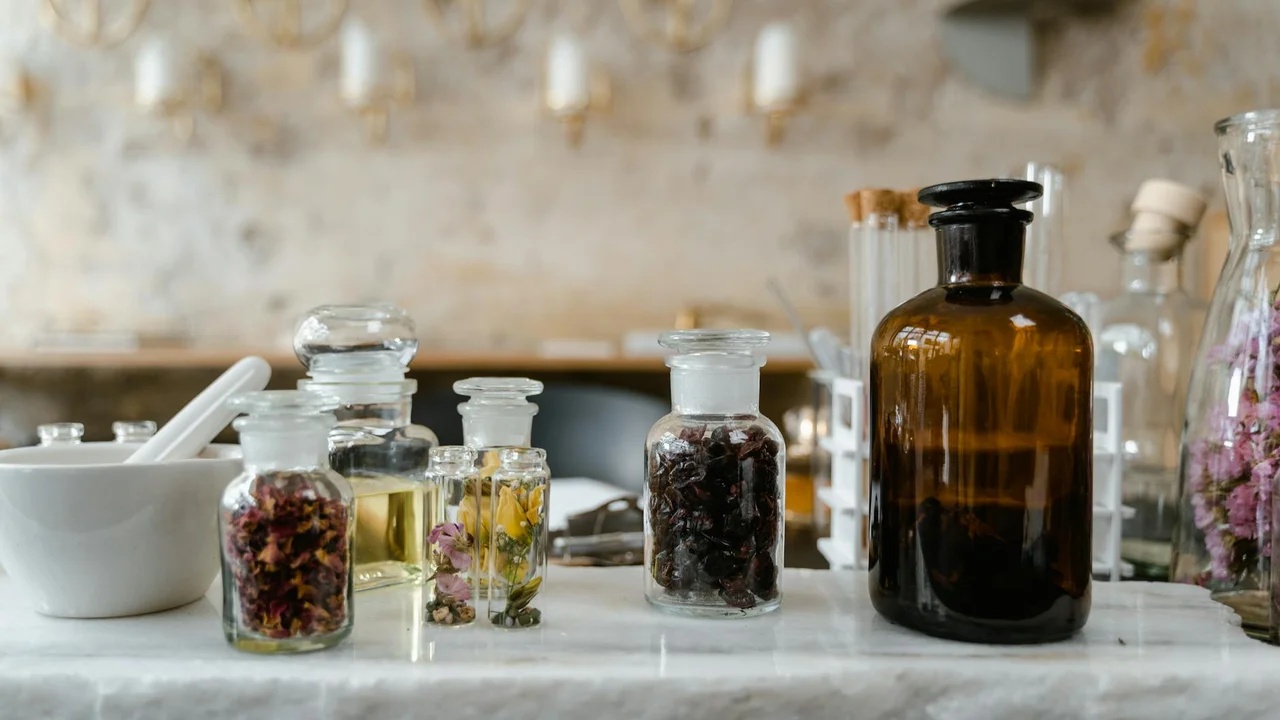
Your home tests can raise a red flag. Maybe the scent is just a little off, or the paper stain lingers. For peace of mind or serious therapeutic work, a laboratory test is the definitive answer.
Specialized labs use a machine called a Gas Chromatograph/Mass Spectrometer, or GC/MS. Think of it as taking a chemical fingerprint of the oil. This process separates the oil into every single compound it contains and identifies each one, revealing exactly what’s in your bottle.
The report you get might look intimidating at first, filled with peaks, graphs, and chemical names like “linalool” or “limonene.” But its purpose is simple: it lists every component and its exact percentage. A pure lavender oil report will show high levels of linalool and linalyl acetate, matching what true lavender should have. If the report shows synthetic additives or compounds from a cheaper oil, you’ll know.
If you want to get an oil tested yourself, search online for “essential oil GC/MS testing” or “analytical chemistry lab.” You won’t typically find a storefront labeled “essential oil testing lab Oregon.” It’s a service offered by private labs. Be prepared for an investment; a single test can cost between $100 and $300. For most of us, this makes more sense for verifying a large, expensive purchase rather than every small bottle.
The good news is you often don’t need to personally commission a test. Many transparent brands do this work for you and make the reports available.
Choosing a Trustworthy Bottle from the Start
Your best strategy is to buy from companies that prove their purity upfront. For brands like Plant Therapy, Revive, or Vitality, your first stop should be their website. Look for a dedicated section, often called “Quality” or “GC/MS Reports,” where you can view or download the test results for your specific batch of oil. If this information is easy to find, it’s a very strong sign of trustworthiness. This approach is similar to how you would verify the purity of high-quality olive oils by checking their certification and authenticity claims.
Before you even click “add to cart,” read the label on the product page or bottle. A reputable seller will always provide three key details.
- Latin/Botanical Name: This tells you the exact plant species. “Lavandula angustifolia” is true lavender, while “Lavandula latifolia” is spike lavender-they have different properties.
- Country of Origin: Where the plant was grown impacts its chemistry. A Bulgarian rose otto and a Turkish rose otto will have subtle scent differences.
- Extraction Method: It should clearly state if it’s “steam distilled,” “cold pressed,” or “CO2 extracted.”
Let price be a guide, not a guarantee. High quality requires resources: vast amounts of plant material, careful distillation, and rigorous testing. A $5 bottle labeled “Rose Otto” is simply not financially possible to produce authentically; it is almost certainly a synthetic fragrance oil or heavily diluted. If a price seems too good to be true, it almost always is.
Stores like Whole Foods make oils accessible, which I appreciate. But the same rules apply. Don’t assume a bottle on their shelf is pure by default. Pick it up, look for the Latin name and origin on the label, and then go check that brand’s website for their testing transparency before you buy carriers oils. But even then, be sure to spot any fake or adulterated oils to ensure you’re getting quality products.
Quick Snapshot: Home Clues vs. Lab Truth
| Test Method | What It Can Tell You | What It Can’t Tell You |
|---|---|---|
| Paper Test | May reveal a heavy vegetable oil base. | If synthetic compounds or precise dilution are present. |
| Your Nose | Can detect a harsh, “off,” or flat scent profile. | The exact chemical nature of the adulterant. |
| GC/MS Analysis | The exact chemical makeup and purity percentage. | Whether you’ll personally like the scent or effect. |
Think of this table as your quick-reference guide. It shows where your own senses are powerful tools and where science needs to step in.
Home tests give you clues, but a lab report gives you the full story.
I keep a stack of coffee filters in my blending area just for the paper test. A real lavender oil from my shelf will leave a faint ring that fully evaporates. One that leaves a thick, greasy stain? That’s a red flag for a filler oil.
Your nose is also a trained detector over time. A pure peppermint oil should feel bright and cooling, almost sharp. A flat or weirdly sweet version might be cut with synthetics.
GC/MS is the gold standard. It’s like a complete ingredient list for the oil. You see every compound, down to the percentage. This is the only way to know for sure.
Your Action Plan: A Step-by-Step Purity Checklist
Let’s turn that knowledge into action. Follow these steps in order, and you’ll feel much more confident about what you’re bringing into your home.
Step 1: Research the Brand Before You Click “Buy”
Look beyond the pretty website. Dig into their “About Us” or “Quality” pages.
A trustworthy company will openly discuss their testing practices, sourcing, and sustainability.
I look for brands that provide batch-specific GC/MS reports. If that information is hidden or missing, I move on. Your time spent researching is the first and best purity test.
Step 2: Read the Bottle Like a Detective
When the bottle arrives, inspect the label before you even open it.
Check for the full, proper Latin name. For example, “Lavandula angustifolia” for true lavender, not just “lavender oil.” This tells you the exact plant species used, which is crucial when identifying botanical oils for their specific uses.
The label should also state it’s 100% pure essential oil. Look for a botanical name and a country of origin. A vague label is often a sign of a vague product.
Step 3: The Simple Home Sensory Check
Now for the hands-on part. First, the paper test. Put one drop on plain white paper and let it sit for an hour.
A pure oil will evaporate completely, leaving little to no mark. A permanent oily ring suggests it’s been diluted with a fatty carrier oil.
Next, trust your nose. Smell it from the bottle, then put a single drop on a scent strip or cotton ball. Does it smell harsh, chemically, or just “wrong” compared to others you’ve tried? Your intuition here is valuable.
If an oil fails these simple checks, I don’t use it on my skin or in my diffuser. It becomes a cleaner or goes in the trash.
Step 4: Considering Professional Lab Testing
For oils you plan to use in products for others, or for a very expensive oil like rose or sandalwood, a professional test can be worth the investment.
You mail a sample to a specialized lab. They run a Gas Chromatography/Mass Spectrometry (GC/MS) analysis.
You get back a detailed report listing every chemical component. This confirms purity and can even highlight if a cheaper oil was added. It’s the ultimate peace of mind.
Step 5: Listen to Your Gut
This might be the most important step. A price that seems unrealistically low is usually a warning.
If a brand makes wild health claims, be skeptical. If something about the oil just feels off, even if you can’t pinpoint why, honor that feeling.
Building a relationship with a few reliable brands is easier than constantly testing new ones. Your confidence, and your blends, will be better for it.
Questions from Curious Plant Lovers
Can I trust a brand’s own GC/MS report, and how do I read it?
You can absolutely trust reports from transparent brands, as they are your greatest tool. Look for a batch-specific report and check that the major compounds listed match the expected profile for that oil-like high linalool for true lavender.
When is it worth the cost to send an oil to a lab myself?
Personal lab testing is most valuable for verifying a large, expensive purchase like rose absolute or sandalwood, or if you’re creating products for sale. For everyday oils, sourcing from brands that provide public reports is more practical.
How would I test a less common oil, like West Indian bay rum?
The process is the same, but the proof is in the chemical fingerprint. A genuine GC/MS report for West Indian bay rum will show specific markers like myrcene and eugenol, confirming you have the true botanical, *Pimenta racemosa*, and not a substitute.
If there’s no “essential oil testing lab near me,” how do I find a legitimate one?
Search for “analytical chemistry” or “GC/MS testing” services online, as most operate via mail-in samples. Note that essential oils can be obtained through various extraction methods—steam distillation, cold pressing, solvent extraction, or supercritical CO2—and results can vary by method. Look for labs that specifically mention essential oil or aromatic plant analysis to ensure they have the right reference libraries for accurate results.
Building Trust with Your Oils
The most important step is trusting your own senses first. Let what you see, smell, and feel guide your initial judgment before you consider anything else.
This blog is a resource for you as you experiment with oils for body, skin, hair, wellness and home. With practice, your confidence in selecting pure, authentic oils for your home apothecary will grow naturally. It is particularly useful when looking for natural oils that promote hair growth and health.
Sources and Additional Information
- Essential Oil Testing: A Guide to Quality, Purity, Methods, and Regulations
- Evaluating Essential Oil Purity & Quality | aromatics.com – Aromatics International
- 3 Ways to Test Essential Oils for Purity – wikiHow
- 5 Simple Tests to Check the Purity of your Essential Oils – Ivy+Light
Noemi Kamińska
Noemi is an accomplished wellness researcher, nutrition care guide and body care expert. She has years of experience in formulating various oil combinations for full body wellness including face, hair, body care, essential oils and cooking oils. She works as a bio-formulator working with oil chemistry and analyzing the best formulations when it comes to your needs. Feel free to reach out to get your oil needs sorted.