
Can Essential Oils Transform Your Workday Focus and Calm?
Do you ever feel frazzled or find it hard to concentrate at your desk? I keep a small roller bottle of peppermint and lemon in my drawer for exactly those moments, and it makes a world of difference.
I’ll guide you through the simple, effective oils that I personally use to support a productive and peaceful workspace.
- The best essential oils for mental clarity and attention
- Soothing aromas that help manage stress and anxiety
- Safe, considerate ways to enjoy oils in an office environment
- Quick, beginner-friendly blends you can make today
How scents can sharpen your focus and soften stress
Your sense of smell is a direct line to your brain’s command center for emotion and memory.
When you inhale a scent, it travels straight to your limbic system. This is the part of your brain that handles feelings and recalls past experiences.
A scent can instantly change your mental state, telling your brain to either wake up and pay attention or to take a deep breath and relax.
Minty and herbal scents, like peppermint and rosemary, tend to have an alerting effect. They feel bright and stimulating. Floral and citrus scents, like lavender and sweet orange, often bring a calming, uplifting feeling that softens the edges of a stressful day.
On my own desk, you’ll always find a small bottle of rosemary. I reach for it on deep editing days when I need my thoughts to stay on track for hours. A single whiff from the bottle feels like straightening a stack of papers in my mind, much like using essential oils during yoga and meditation helps to enhance mindfulness.
Oils to turn up your concentration
These scents are your allies for diving into complex tasks and finding a state of flow.
They help quiet mental chatter and bring your attention to the work right in front of you.
Peppermint: The wake-up call
Peppermint oil has a crisp, penetrating scent that acts like opening a window in your mind.
It cuts through afternoon drowsiness and mental fog with a cool, sharp clarity.
For an instant personal boost, I make a simple inhaler stick: add 5 drops of peppermint oil and 3 drops of lemon oil to the cotton wick of an empty inhaler tube.
Peppermint is powerful. If you’re using a diffuser, start with just one drop to see how you respond, especially in a shared space.
Rosemary: For memory and mental stamina
Rosemary has been linked to remembrance for centuries. Today, that translates to holding details in your head during data analysis or weaving threads together in a long report.
Its scent is clean and herbaceous. To me, it smells like fresh pencil shavings mixed with the green warmth of a sunny garden herb patch.
For a quick refresh during a long session, dilute one drop of rosemary oil in a teaspoon of jojoba carrier oil and gently rub a tiny amount on your temples.
This personal aroma cloud moves with you and can help sustain focus.
Lemon: To clear away the fog
Lemon oil does double duty. It promotes mental clarity while lifting your mood with its sunny, bright aroma.
It’s fantastic for dispelling that feeling of being stuck or overwhelmed at the start of a project.
A word of caution: citrus oils can degrade certain plastics over time. It’s best to use them in a glass or ceramic diffuser. When choosing essential oils, make sure they are safe for your specific diffuser type, such as reed or ultrasonic models.
An easy whole-room trick: place a bowl of warm water near a heating or air conditioning vent and add a single drop of lemon oil to the water.
The moving air will carry the bright, clean scent gently throughout the space.
Oils to ease workplace tension
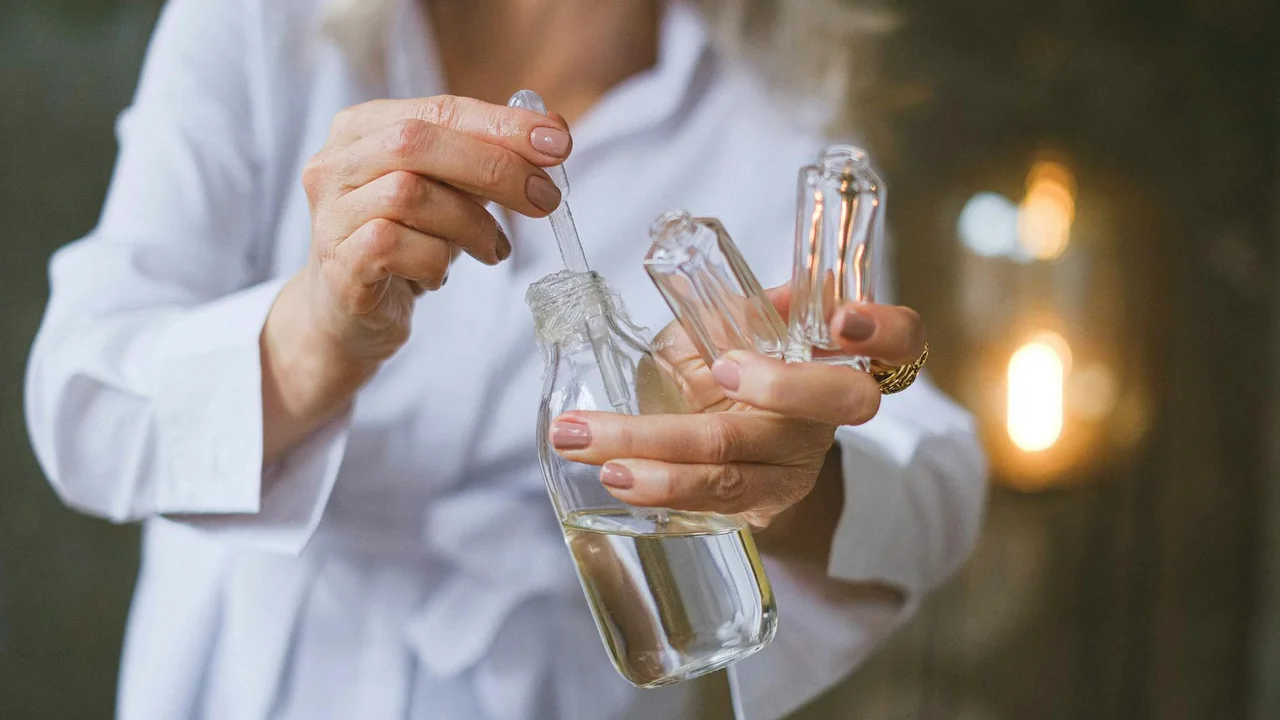
Think of these oils as your first-aid kit for the mind. I reach for them right before a big meeting or after a difficult call to find my center again.
Lavender: The versatile soother
Quality truly matters here. A harsh, synthetic-smelling lavender won’t calm you; it might just give you a headache.
I keep a small roller bottle in my desk. Applying a diluted blend to your wrists is like a personal, comforting perfume no one else needs to notice. I find it takes the jagged edge off my stress, leaving me feeling softer and more collected.
Bergamot: The uplifting calm
Bergamot is special because it can soothe low-grade anxiety while lightly brightening your mood. It’s for when you feel dimmed but need to function.
This oil makes your skin photosensitive, so never apply it if your skin will see the sun that day. I only use it topically at night or in a diffuser, unlike coconut oil which is often mistaken as safe for sun exposure.
To me, it smells like a sophisticated Earl Grey tea, both comforting and elegant.
Cedarwood: The grounding anchor
When my thoughts are a tornado of deadlines, cedarwood is my anchor. Its warm, woody scent feels like a steadying force.
I think of it as a mental hug that helps my scattered nerves settle down. For a deeply stabilizing air blend, I often add one drop of cedarwood to one drop of lavender in my diffuser. The combination is wonderfully grounding.
How to use oils respectfully at your desk
Using oils at work is as much about etiquette as it is about aroma. Knowing the definitions—what counts as an essential oil, a carrier oil, or a fragrance oil—helps. Understanding the common uses of various botanical oils guides our choices. We share the air, so a little consideration goes a long way.
The personal inhaler: Your discreet scent secret
You only need a few things: a blank inhaler tube, a cotton wick insert, and your chosen essential oils.
Making one is a simple, two-minute task. Follow these steps:
- Add 10 to 15 drops of your essential oil blend directly onto the cotton wick.
- Slide the wick into the plastic inhaler tube.
- Click the cap on, and you’re done.
This is my top recommendation for shared offices because it gives you all the benefits with zero scent impact on your colleagues.
The desktop diffuser: For when you have control
A small ultrasonic diffuser is a good choice for a private office. They run quietly and add a hint of humidity to dry office air.
My golden rule is this: less is more. For your immediate desk area, 1 to 3 drops of oil total is often plenty.
It’s a kind gesture to do a quick scent check with anyone sitting close by. A simple “Is this scent okay for you?” shows respect.
Topical application: Keep it simple and safe
Always dilute essential oils in a carrier oil before they touch your skin. My shelf favorite is fractionated coconut oil for its light texture.
For safe daily use, a 1% dilution is perfect. That means mixing one drop of essential oil with one teaspoon of your carrier oils.
Apply a tiny amount to your temples, the back of your neck, or your wrists. Always wash your hands after application to prevent accidentally transferring oils to your eyes. This is one of many common mistakes to avoid when applying body oil.
Critical safety and courtesy for the workplace
Bringing plant allies into a shared space is wonderful, but it comes with a responsibility to your coworkers.
Always put courtesy and safety first.
Oils to avoid in a shared space
Some oils are simply too potent or polarizing for an open office.
I generally avoid diffusing eucalyptus, tea tree, and strong spices like oregano or clove in common areas.
Scents that smell “medicinal” or overly intense to you can quickly trigger headaches or nausea for someone else.
When in doubt, use a personal inhaler stick instead of a room diffuser.
It keeps the scent experience entirely to yourself.
Duration and diffusion etiquette
Less is always more with diffusion.
I recommend short intervals of 30 minutes on, followed by at least 60 minutes off.
This practice prevents olfactory fatigue, where your nose stops registering the scent, and it respects the shared air quality.
The goal is a subtle aroma bubble around your own desk.
If a colleague walking by can clearly identify the scent, it’s probably too strong.
Navigating scent sensitivities
Scent sensitivities are a real and valid concern for many people.
If your workplace has a fragrance-free policy or a sensitive colleague, honor it.
You still have excellent options for personal use.
Try applying a diluted blend to the soles of your feet before putting on socks and shoes.
The skin there is less sensitive, and the scent stays completely contained.
For a quick, private boost, you can also simply unscrew the bottle and take one or two mindful breaths directly from it.
Blends to rescue your afternoon energy
When the clock hits 3 PM and your focus drifts, a targeted aromatic blend can be a real lifesaver.
These are two of my most reliable recipes for shifting the energy right at my desk.
The “Clear Head” Focus Blend
This blend is my secret weapon for cutting through mental fog.
Add 2 drops of Rosemary, 2 drops of Lemon, and 1 drop of Peppermint to your diffuser.
It creates an invigorating herb garden scent with a bright citrus breeze that feels like opening a window in your mind.
I reach for this during post-lunch work blocks or any time I need to untangle a complex problem.
It sharpens my thoughts without making me feel jittery.
The “Steady Ground” Calm Blend
When deadlines loom and stress starts to buzz, this blend helps me find my center.
The recipe is 3 drops of Lavender, 2 drops of Bergamot, and 1 drop of Cedarwood.
It’s beautifully balanced-floral and slightly citrusy, but anchored by that warm, woody base note.
This is my personal go-to blend for winding down a hectic day, and it works wonders diffused during a stressful afternoon.
For a more direct approach, you can dilute a drop in a teaspoon of carrier oil and apply a dab to your wrists.
Take a deep breath whenever you need to reset.
Quick Answers from Your Plant Ally
What are the absolute best oils for focus and for stress?
For laser-sharp focus, reach for peppermint, rosemary, or lemon. To dissolve stress and anxiety, lavender, bergamot, and cedarwood are your most reliable, research-backed allies.
What’s the safest, most considerate way to use oils at my desk?
A personal inhaler is the gold standard for shared spaces-it gives you all the benefits with zero impact on colleagues. In a private office, a diffuser with just 1-3 drops for 30-minute intervals is perfect.
Are there any critical safety “must-knows” before I start?
Always dilute oils in a carrier oil for skin application, and never apply bergamot before sun exposure. For shared air, avoid diffusing potent, medicinal oils like eucalyptus or tea tree to be a courteous neighbor.
I have a scent-sensitive coworker. Can I still use oils?
Absolutely. Apply a diluted blend to the soles of your feet (under socks) for a completely personal experience, or simply take a mindful breath directly from the bottle for a quick, private reset.
How do I know if I’m using too much oil in a diffuser?
The scent should create a subtle bubble around your desk, not fill the room. If a passing colleague can clearly identify the aroma, it’s too strong-reduce the number of drops immediately.
Your Aromatic Anchor at Work
Begin by pairing a single, clear intention with a matching scent, like lemon for mental clarity or lavender for quieting overwhelm. This simple, mindful practice is the most effective way to weave the supportive power of botanicals into your workday. If you’re curious about which essential oil blends pair best with lavender, we’ll explore simple lavender pairings and blend ideas in the next step.
For more guidance on using oils for body, skin, hair, and home, I welcome you to keep exploring with me here. You’ll learn which specific oils to use for oil cleansing of the skin and hair. Trust your own observations as you experiment; your personal response is the finest measure of any blend’s success.
Noemi Kamińska
Noemi is an accomplished wellness researcher, nutrition care guide and body care expert. She has years of experience in formulating various oil combinations for full body wellness including face, hair, body care, essential oils and cooking oils. She works as a bio-formulator working with oil chemistry and analyzing the best formulations when it comes to your needs. Feel free to reach out to get your oil needs sorted.