
Are Linseed and Tung Oils Safe for Skin and Wood Finishing?
It’s completely normal to pause before using linseed or tung oil, wondering if it will irritate your skin or harm your woodworking project. From my own bench and apothecary shelf, I can give you the straightforward guidance you need.
The truth is, with the right knowledge of their chemistry and use, both oils can be handled safely.
- How their chemical composition affects safety
- Clear guidelines for direct skin contact
- Reliable methods for wood finishing
- Practical tips I use in my own home
Can You Safely Touch Linseed or Tung Oil with Bare Skin?
The short answer is no. I keep these oils on a separate shelf in my workshop, far from my skincare bottles of jojoba and almond oil. They are for wood, not for you.
Their chemistry explains why. Linseed oil is packed with linoleic acid and tung oil contains eleostearic acid. These are drying oils that react aggressively with oxygen. This powerful curing action that hardens wood can also trigger a harsh reaction on your skin, leading to irritation. Beyond woodworking, people weigh the health benefits and potential risks of linoleic acid in dietary and topical oils. How this fatty acid behaves in foods versus skin products matters for overall safety.
Common reactions include contact dermatitis. Think redness, an itchy rash, or bumps that look like poison ivy. The tricky part is sensitization. Your skin might be fine the first few times, then react violently later. It’s a risk I never take.
A cured, dry film on furniture is less risky than wet oil, but it’s not designed for skin contact. Don’t treat an oiled cutting board or bowl like a lotion. For prolonged contact, like a salad bowl, a fully cured pure tung oil finish is considered food-safe, but your hands should wash the veggies, not soak in the finish.
If oil gets on your skin, act fast. Wash the area thoroughly with soap and cool water. Do not use mineral spirits or other solvents to clean your skin-this can drive the irritant deeper. Soap and water are your best first defense.
What’s Really in Your Bottle: Raw, Boiled, and Pure
Not all bottles labeled “linseed oil” are the same. The terms matter for both your project’s success and your safety, especially when buying for food-grade or body application.
Raw linseed oil is simply cold-pressed flaxseed oil. It cures very slowly, often over days. Pure tung oil is just pressed from tung nuts. Both are natural plant oils, but still skin irritants. This prompts a look at how cold-pressed oils differ from refined ones and why that difference matters. Understanding those differences helps you make safer, more informed choices.
Boiled linseed oil is misleading. It’s not actually boiled. Modern “boiled” linseed oil has chemical driers like cobalt or manganese added to speed curing, making it toxic and completely unsuitable for any skin or food contact, unlike natural oils that are safe for ingestion. I treat this bottle with great caution in my shop.
Polymerized or “stand” oil is a third type. It’s heat-treated without metallic driers, which thickens it and speeds cure time. It’s a popular choice for finishers but remains a skin irritant.
For any food-related item, like a butcher block, 100% Pure Tung Oil is the only traditional oil finish I would consider. It cures to a hard, food-safe film. Remember, food-safe is not the same as skin-safe-your hands should not be in prolonged contact with it.
Always, always read the label. Look for the words “100% Pure” and check the ingredient list for metallic driers or volatile thinners. Your vigilance is your best protection.
| Type | What It Is | Cure Time | Key Safety Note |
|---|---|---|---|
| Raw Linseed Oil | Cold-pressed flaxseed oil, no additives. | Very slow (3-5+ days) | Natural but a skin irritant. Not for consumption. |
| Boiled Linseed Oil | Raw oil with added chemical driers (cobalt, manganese). | Fast (12-24 hrs) | Toxic. Avoid skin contact and never use on items touching food. |
| 100% Pure Tung Oil | Pressed from tung nuts, no additives. | Medium (24-48 hrs) | Cures to a food-safe film, but liquid oil is a skin irritant. |
Finishing a Wooden Bowl or Cutting Board: A Safe Method
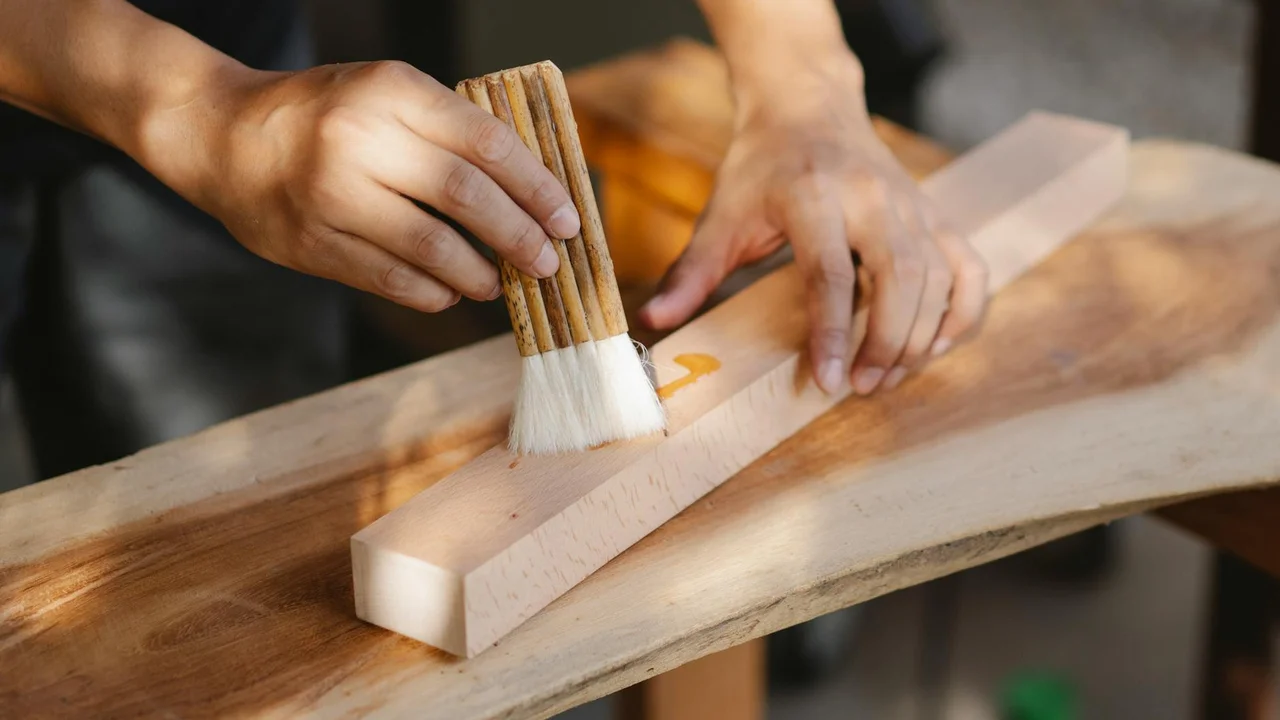
For projects that touch your food, your options narrow to two: raw linseed oil, which is just food-grade flaxseed oil from the grocery store, and 100% pure tung oil. These are the only candidates I trust for a salad bowl or a cutting board in my own kitchen.
The label “food-safe” is not the same as “food-grade” when you’re shopping for these oils. “Food-grade” means the oil is edible, like the flaxseed oil you might take as a supplement. “Food-safe” can describe a cured finish that won’t leach toxins, but the product itself might contain chemical driers you shouldn’t ingest. Always look for the edible, food-grade version.
The biggest mistake is applying the oil too thickly. The right method is a thin, almost stingy coat. I wipe it on generously, let it soak in for about 20 minutes, then wipe off every last bit of excess with a clean cloth. If you leave it glossy and wet, it will dry sticky and never fully cure.
Patience is your most important tool here. Raw linseed oil can take days to feel dry. Pure tung oil needs weeks to fully cure and harden. Do not use the item until the oil has fully cured and you can no longer smell it. That curing tung oil has a distinct, warm, nutty scent that lingers in my workshop.
So, is boiled linseed oil food safe? The answer is a firm no. “Boiled” linseed oil contains metal salt driers like cobalt or manganese to speed drying. These are toxic and should never come into contact with food or your skin for prolonged periods.
How Do You Apply These Oils Correctly to Wood?
Gathering the right supplies makes the process safer and smoother. You’ll need nitrile gloves, a respirator mask for sanding dust (not for the oil fumes), natural bristle brushes or lint-free cotton cloths, and excellent ventilation.
Here is my step by step method for a safe, durable finish.
- Always test your oil and technique on a scrap piece of the same wood first. This tells you the final color and how many coats you’ll want.
- Sand your project smoothly, ending with a fine grit (like 220). Remove all dust with a tack cloth.
- Wearing gloves, apply a liberal amount of oil with a cloth or brush, covering the entire surface. This is called the “wet wipe” technique-you’re flooding the wood pores.
- Let it penetrate for 15-30 minutes. Then, take a fresh, clean cloth and wipe the surface completely dry. No visible wetness should remain.
- Let it cure in a warm, dust-free room. For subsequent coats, lightly sand with fine sandpaper between each one to ensure good adhesion.
- Repeat this process for 3 to 5 coats, or until you achieve the protection and sheen you desire.
Remember, you are building protection with multiple thin layers, not one thick one. Pooled oil in corners is the enemy of a good finish.
The Silent Hazard: How to Dispose of Oils and Rags
This is the most critical safety step, and I’ve seen the danger firsthand. Yes, linseed oil and tung oil can spontaneously combust. The science is simple: as these oils cure, they oxidize and release heat. A rag bunched up in a pile or trash can traps that heat. Insulated, the temperature can rise until the rag smolders and ignites.
I have two foolproof methods for dealing with used rags. The first is to lay each rag out completely flat, singly, on a concrete driveway or over a metal railing outdoors. Let them dry and harden completely for a few days. Once they are stiff and dry, you can dispose of them in a metal can.
The second, and my preferred method, is to submerge them in a sealable metal container filled with water. An old metal paint can works perfectly. This stops the oxidation process cold. Never, ever toss an oil-soaked rag into a household wastebasket or pile them in a workshop corner.
Common Troubleshooting for Home and Garden Projects
You might wonder if boiled linseed oil is safe for garden beds. I advise against it. Those metal driers can contaminate your soil and potentially affect your plants or vegetables. It’s a risk that isn’t worth taking, especially when disposal methods are available for such used oils and fats.
For chicken coops, the same rule applies. I would not use linseed oil where my animals could peck or rub against it. Safer, non-toxic alternatives exist, like a citrus solvent-based finish or, if you can ensure proper curing time, pure tung oil.
If your project stays tacky forever, two things likely happened. You either applied the oil too thickly, or it’s trying to cure in an environment that’s too cold or damp. A warm, dry space is essential for these oils to polymerize and harden properly.
Finally, applying tung oil over an existing polyurethane finish generally doesn’t work. Polyurethane sits on top of the wood like a plastic sheet, while tung oil soaks in. The oil can’t penetrate the poly layer, leading to a messy, uneven result that likely won’t dry.
Your Safety Checklist Before You Start
Working with drying oils is deeply rewarding, but safety comes first. I keep this checklist pinned right above my workbench. Go through it every single time.
- Read the entire product label, front and back. This is your most important source of truth. Is it pure oil or a pre-mixed finish? Look for any thinner or solvent warnings.
- Confirm your project’s goal. Ask yourself: Is this a baby’s toy, a kitchen counter, or an outdoor bench? Your answer dictates which oil, if any, is suitable.
- Gather your Personal Protective Equipment (PPE). I will not start without nitrile gloves, a respirator mask rated for organic vapors (not a dust mask), and safety goggles. Skin contact and fumes are no joke.
- Ensure powerful, active ventilation. Open windows are not enough. I use a fan blowing out a window to actively pull fumes away from my breathing zone.
- Prepare a safe plan for rag disposal. Oily rags can spontaneously combust. I have a metal can with a tight lid, filled with water, ready for used rags immediately after application.
- Keep a fire extinguisher rated for Class B (flammable liquids) within reach. Hope you never need it, but it must be there.
When to Put Down the Brush and Seek Professional Help
Knowing your limits is a sign of a wise craftsperson. There are times when the best step is to pause and call in expertise.
If you experience difficulty breathing, throat tightening, or significant swelling after contact or inhalation, seek immediate medical attention. This indicates a severe reaction that needs professional care.
Consult a professional wood finisher for valuable projects. I would not experiment on a family heirloom antique or a large, intricate piece if I were new to wood finishing oils. Their experience is invaluable for complex surfaces or wood with unknown prior treatments.
Talk to your doctor before starting if you have a known sensitivity to nuts or seeds. Cross-reactivity with linseed (flaxseed) oil, while not guaranteed, is a real possibility your physician can advise on.
Finally, call your local hazardous waste facility for guidance on disposing of large quantities of unused oil or contaminated materials. They can provide specific instructions to keep you and your community safe, especially for delicate substances like used cooking oil and essential oils.
Your Questions, Answered
What’s the safest way to handle these oils in my workshop?
Always wear nitrile gloves and ensure strong ventilation to avoid skin contact and inhaling fumes. Keep a Class B fire extinguisher nearby and have a sealed metal container with water ready for used rags immediately.
Can I use any linseed oil on a cutting board?
Only raw, food-grade linseed oil (which is edible flaxseed oil) or 100% pure tung oil are suitable. Never use “boiled” linseed oil on any item that will touch food, as its chemical driers are toxic.
Why is proper disposal of rags so critical?
Oily rags can spontaneously combust as the oils cure and generate heat. Always lay rags flat to dry completely outdoors or submerge them in a water-filled metal can to eliminate this serious fire risk.
What’s the biggest mistake people make when applying these oils?
Applying the oil too thickly, which leads to a sticky, non-curing finish. The key is to wipe on a thin coat, let it penetrate, and then thoroughly wipe off all excess.
If I have a nut allergy, should I avoid these oils?
Exercise caution and consult your doctor, as linseed comes from flax seeds and tung oil from nut kernels. Historically, linseed oil has been used in paints and as a traditional health supplement, highlighting its long-standing relevance beyond finishes. While reactions to the cured finish are rare, handling the raw oils could pose a risk for some individuals.
Final Thoughts on Working with Plant Oils
The single most important piece of advice I can give is to always respect the oil’s nature. Raw linseed and tung oils belong on wood, where they can cure safely, while only properly processed, skin-safe versions should ever touch your body. Treating them with this clear distinction is the foundation of using them both effectively and safely.
I hope this guidance empowers you to work with these beautiful, potent oils in your home and craft. There is deep satisfaction in using natural materials correctly, and I’m here on the blog to help you navigate those choices for your wellness and projects. Whether you’re curious about their types or how viscosity impacts their use for body care and consumption, understanding these nuances makes all the difference.
Further Reading & Sources
- Are Linseed & Tung Oil Non-Toxic and Safe? (Yes, Sort Of) – My Chemical-Free House
- Tung Oil vs. Linseed Oil Comparison Guide
- Tung Oil vs Linseed Oil – The Break Down– Walrus Oil
- Tung Oil vs Linseed Oil | Lowe’s
- Linseed Oil vs Tung Oil: What’s the Difference? – Vermont Woods Studios
- Are there safety procedures or things to look out for when messing with linseed oil, tung oil, or shellac for coating wood? – Quora
Noemi Kamińska
Noemi is an accomplished wellness researcher, nutrition care guide and body care expert. She has years of experience in formulating various oil combinations for full body wellness including face, hair, body care, essential oils and cooking oils. She works as a bio-formulator working with oil chemistry and analyzing the best formulations when it comes to your needs. Feel free to reach out to get your oil needs sorted.